
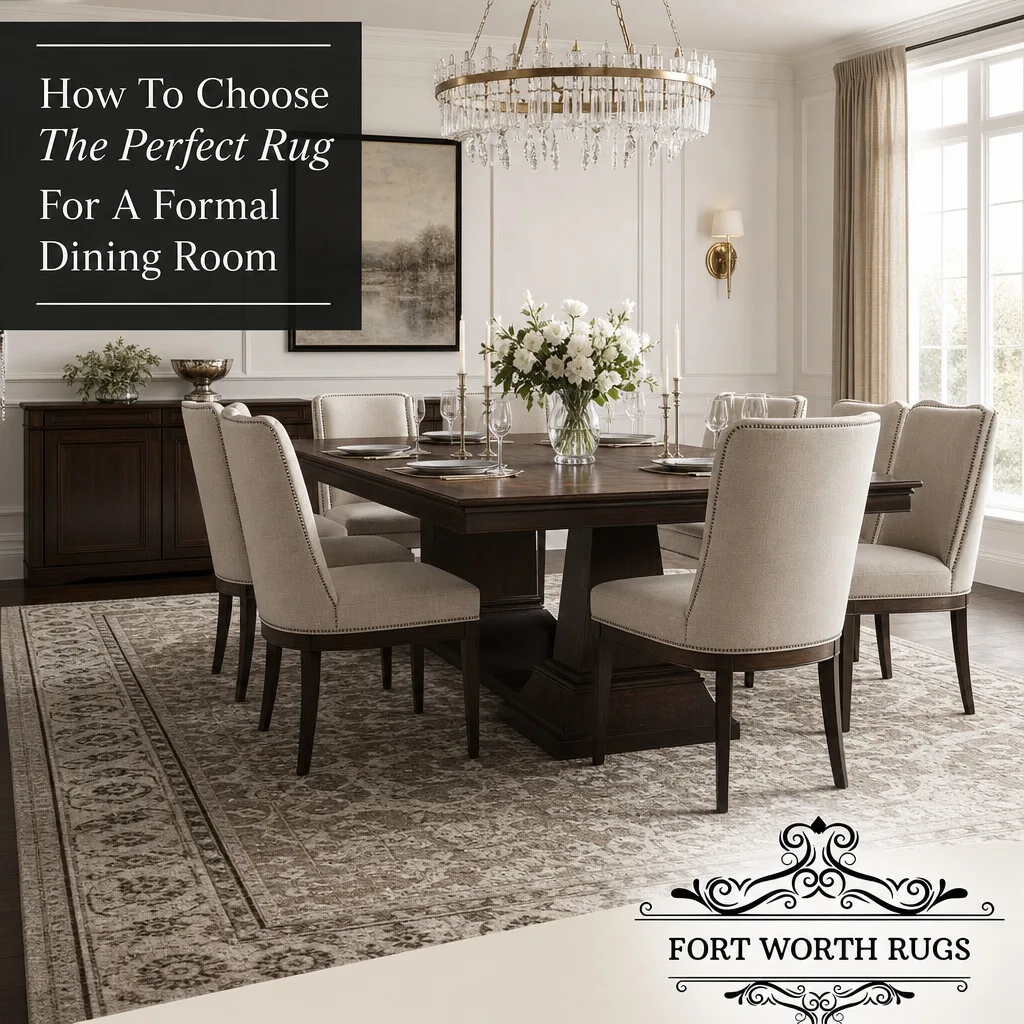
Wondering how to choose the perfect rug for a formal dining room that looks refined, fits correctly, and can stand up to real meals, chairs, spills, and long-term use? Fort Worth Rugs helps homeowners select, clean, protect, and care for quality dining room rugs with confidence.
Choosing the right rug for a formal dining room takes more than matching colors. The rug needs to frame the table, allow chairs to move easily, complement the room’s design, and handle foot traffic, food spills, and furniture weight. At Fort Worth Rugs, we help customers compare rug sizes, fibers, patterns, construction, and care needs so their dining room rug looks beautiful and remains practical for years.
Formal dining room rug size for tables and chairs
The most common mistake in dining room rug selection is choosing a rug that is too small. A formal dining room rug should extend well beyond the edges of the table so guests can pull chairs out without catching on the rug border. As a general rule, allow at least 24 to 30 inches of rug space beyond the table on every side.
For example, a 6-foot dining table often needs a rug closer to 9×12 rather than 8×10, depending on chair depth and room size. If the rug feels cramped, the dining area may look unfinished and chair movement can wear down the rug edges faster. Measuring your table with chairs pulled out is one of the best first steps before shopping for area rug sales or custom sizing options.
Room proportions also matter. In a formal dining room, the rug should feel balanced with the architecture, sideboards, windows, and light fixture. A rug that is properly scaled creates a grounded look without overwhelming the room.
Best rug materials for a formal dining room
Material choice affects appearance, durability, cleaning results, and long-term care. Wool is one of the most popular choices for dining rooms because it is resilient, naturally soil-resistant, and comfortable underfoot. A quality wool rug can handle regular use when it receives proper vacuuming and periodic professional rug cleaning.
Silk rugs are elegant and finely detailed, but they are more delicate. In dining rooms where meals, wine, children, or pets are common, silk may require more careful placement and maintenance. Many Persian and Oriental designs include wool foundations with silk accents, offering visual detail while still providing usable strength.
Synthetic rugs may appeal to some households due to easy access and lower upfront cost, but they may not age like fine wool, Persian, or hand-knotted pieces. If you want a formal look with lasting quality, Fort Worth Rugs can help you compare wool, silk, antique, and contemporary options based on how your dining room is actually used.
Oriental rugs and Persian rugs for formal dining rooms
Oriental rugs and Persian rugs are classic choices for formal dining rooms because their patterns can visually soften furniture, disguise minor crumbs between cleanings, and add a collected look. Traditional medallion designs work well under centered dining tables, while all-over patterns are helpful when table placement covers much of the design.
Color selection should coordinate with flooring, wall color, dining chairs, artwork, and window treatments. Deep reds, navy, ivory, gold, soft blue, and earth-toned palettes are common in formal settings. A busier pattern can be practical in a dining area because small marks are less noticeable between cleanings.
Collectors and homeowners with antique rugs should also consider condition before placing a rug under heavy furniture. Fort Worth Rugs provides antique rug care, rug cleaning, and rug restoration guidance to help customers decide whether a treasured piece is suitable for dining use or better placed in a lower-risk room.
Rug pattern, color, and pile height for dining spaces
A formal dining room rug should complement the room without competing with every design element. If your dining chairs are upholstered in patterned fabric, a more restrained rug may work best. If the furniture is simple, a detailed rug can become the defining feature of the room.
Pile height is especially important under dining chairs. Low-pile and flatweave rugs tend to work better because chairs slide more smoothly and crumbs are easier to remove. High-pile rugs may feel plush, but they can trap food particles and make chair movement awkward.
Consider these practical buying points before selecting a dining room rug:
- Choose a low to medium pile for easier chair movement
- Select patterns that help hide light soil between cleanings
- Avoid rugs that are too small for pulled-out chairs
- Ask about fiber type, dye stability, and cleaning needs
- Use a quality rug pad to reduce slipping and premature wear
- Plan for routine rug cleaning, especially in active dining rooms
A formal dining room rug should suit both special occasions and everyday meals.
Custom rugs for formal dining rooms with unusual layouts
Not every dining room fits standard rug sizes. Long banquet tables, square dining rooms, open floor plans, and historic homes may call for custom rugs or carefully sourced sizes. A custom rug can help you achieve proper chair clearance while keeping the rug proportional to the room.
Custom options may include specific dimensions, border styles, colors, patterns, or materials. This is especially helpful for interior design projects where the dining room needs to coordinate with adjacent living areas, flooring, or existing antique pieces.
Fort Worth Rugs helps customers think through both design and care before selecting a custom dining room rug. A rug should not only look right on installation day; it should be cleanable, repairable, and appropriate for the way your household uses the space.
Dining room rug cleaning, stain concerns, and repair planning
Dining room rugs face unique risks: wine, sauces, grease, pet accidents, chair abrasion, and furniture compression. Choosing the right rug specialist matters because delicate fibers, natural dyes, silk accents, and antique construction require careful evaluation before cleaning. Safe rug cleaning methods should be based on fiber, dye stability, soil level, and rug construction.
Customers often ask about stain removal, pet odor, fringe wear, and restoration timelines. Some stains and damage respond very well to professional treatment, while others may leave permanent changes depending on the spill, fiber, dye, and how long it remained in the rug. A knowledgeable rug team will set realistic expectations before beginning cleaning, rug repair, fringe repair, or rug restoration.
Protecting rug value also means acting early. Loose edges, worn fringe, unraveling ends, moth damage, pet chewing, and water exposure should be inspected promptly. Hand-repair craftsmanship can help preserve structure and appearance, but the best approach depends on the rug’s age, origin, materials, and condition. Regular vacuuming, quick blotting after spills, rug protection options, and periodic professional cleaning all support longer rug life.
If you’re looking for the right formal dining room rug
If you’re looking for a dining room rug that fits beautifully, handles real use, and can be cared for properly over time, Fort Worth Rugs can help. Our team assists with rug selection, area rug sales, Oriental and Persian rugs, custom rugs, professional rug cleaning, rug repair, rug restoration, fringe repair, rug protection, antique rug care, and stain treatment recommendations.
The right rug should feel refined, practical, and proportioned to your space. Whether you are furnishing a new formal dining room, protecting an antique rug, or deciding if an existing rug needs cleaning before placement, Fort Worth Rugs offers guidance based on craftsmanship, fiber knowledge, and long-term rug preservation. Contact us to find, clean, repair, or care for a rug that suits your home and dining style.